
ARTICLE 1.12 (Office: Faculty of Chemical Engineering, U.P.B. – Author: Alonso Franco J. – Study on Mental Trainers Conducted by U.P.B.)

Study on Mental Trainers Conducted by U.P.B.
Description:
Following studies on the morphological and chemical characteristics of the brains of intelligent rats, evaluated in various tests, such as maze exits, a line of research was opened to determine the relationship between intelligence, training, and the electrical waves associated with stimuli produced by interaction with the environment, on brain function.
It was discovered that:
- The brain grows in response to stimulation, whether natural or artificial.
- Stimulation results in an electrical vibration of a characteristic frequency.
- It is possible to artificially stimulate the brain using machines.
- The brain is “drawn” by the stimulus, resonating at the same frequency.
- States of mind exhibit characteristic electrical vibration frequencies.
- It is possible to reproduce mental states by directly or indirectly stimulating the brain with the wave frequency associated with that state.
The above led to a revolution in the field of applications of this technique, as it allows direct interaction with the individual’s inner workings without intruding on their body chemistry, producing dramatic effects in areas such as:
- Increased IQ
- Suppression of anxiety, depression, and phobias
- Termination of harmful habits
- Weight management
- Learning and super-learning
- Peak performance in mental, physical, and high-performance activities
- Stimulation of creativity
The fields of application are expanding at an incredible rate, as new and more sophisticated machines are designed to stimulate and map the brain’s interior.
Among other devices, the following can be mentioned:
- Light and sound stimulators
- Cranial electrical stimulator
- Neurosearch 24
- Graham enhancer
- Mind mirror
The number of devices involved is extensive, and this proposal aims to encourage the creation of a centre where people can learn to operate these devices and research their effects and potential applications in the local area.

Introduction
Rich vs. Poor Environment
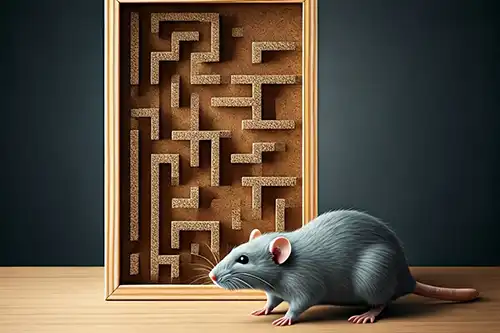
Around 1992, at the University of California, families of skilled and unskilled rats, selected for over 40 years (nearly 100 generations), were available. Researchers began investigating how this difference was reflected in the animals’ brain morphology and chemistry.
The skilled rats exhibited higher levels of acetylcholinesterase and other neurotransmitters in their cerebral cortex compared to the unskilled rats.
Similar results, associated with a qualitative increase in the complexity of the cerebral cortex, had already been observed as early as 1780 by Dr. Michael Gaetano. Who compared trained animals with untrained captive animals. He observed that the differences in the number of convolutions and complexity of the cortex were caused by differences in the animals’ training or experience.
These results led the Berkeley scientists to design the rich vs. poor environment experiment.
After placing genetically identical litters of rats in environments that differed only in the quality and quantity of sensory stimuli for a period of 30 days, Drs. Rosenzweig and Diamond found significant physical and chemical differences in the brains of the animals in their experiment.
The scientists wanted to know if the results obtained by Gaetano and themselves were due to training, genetics, or some other cause, and therefore tested the rich environment against the poor one.
Results of the experiment
The results obtained were analysed in the February 1972 issue of Scientific American. These results were then, very cautiously, extrapolated to generate new lines of research in humans, for example, comparing the auditory regions of the brains of musicians with those of non-musicians.
Morphologically
- Synaptic junctions 50% larger
- Thicker axons
- Greater number of terminal arms
- Greater number of spines
- Thicker and more branched dendrites
What causes these differences?
Among others, the following were ruled out:
- Manipulation
- Stress
- Genetic factors
It was found that the primary reason for the change was the increased chemical activity of the cellular environment generated by the increased electrical activity, which in turn stemmed from a greater number of sensory stimuli.
Upon discovering that experience can cause radical changes in brain morphology and chemistry, we immediately wondered if it is possible to transform these cases where natural conditioning already exists. For example, what would happen if we trained a litter of untrained rats in an enriched environment?
After 30 days of training, the untrained rats improved their intelligence and brain characteristics to the point of reaching those of intelligent rats without special training.
In other words, we are verifying that old law that states: “AN ORGAN THAT IS NOT USED ATROPHIES” and vice versa, “AN ORGAN THAT IS STIMULATED DEVELOPS.”
Brain Electrical Waves
What is the electrical activity of the brain like?
Can this activity be artificially induced by machines?
The activity of the sensory organs translates into an electrical stimulus that reaches specific areas of the brain’s cortex. There, each neuron responds with a voltage between 1 and 5 microvolts to the stimuli it receives. The entire network of neurons produces electrical noise with a potential of up to 500 microvolts, the frequency of which is determined by the type and quantity of stimuli and can be classified as indicated above.
Frequency versus Brain Activity
Many possible correlations between EEG and a person’s activity were investigated, leading to the establishment of correspondences such as the following:
- Creativity 12 Hz Alpha waves
- Concentration 4 Hz Theta waves
- Blocking Lack of alpha waves
- Brilliant ideas Coherence, phase
- Meditation 8 Hz Total coherence
- Brain evoked potentials
Around 1979, scientist David Reagan of the University of London, investigating how sensory stimuli are manipulated at the brain level, demonstrated that the components of a visual or auditory signal can be extracted periodically from the brain’s background noise using a device based on Fourier wave analysis or by summing transient stimuli.
Each cell contributes its own voltage to the overall electrical activity of the brain, revealing a clear relationship between stimulus and electrical response. These responses are called evoked potentials (1 to 5 µV) and can be observed through the scalp using a statistical analysis system of EEG waves or Fourier series.
The important fact is that if we provide a periodic visual stimulus to our eyes, an electrical wave of the same frequency will be generated within our brain. This wave could be detected, and in fact was detected by Dr. Reagan.
This finding is ground-breaking, as it demonstrates that an electrical signal can be precisely generated within the brain using external stimuli, and at a frequency identical to the brain’s own.
In a parallel investigation, neuroscientist W. Gray Walter discovered that when strobe light flashes are directed at closed eyes, the brain responds by generating an electrical wave at the same frequency as the stimulus, not only in the olivary centre and areas associated with vision, but throughout the entire brain.
In the course of another investigation, Dr. Tomas Budzinsky of the Behavioral Medicine Associates Clinic in Denver also found that if the brain was artificially stimulated at a given frequency, it was possible to reproduce not only the brain’s own electrical wave, but also the associated state, as the brain allowed itself to be “carried away” by the stimulus.
Psychotropic Stimulation Machines
Around 1982, neuropsychiatrist Dr. Dennis Georges invented the first light and sound stimulation device called the “Optoacoustical Synchro Energizer,” more commonly known as Megabrain.
Subsequently, in 1986, writer and researcher Michael Hutchison published his first book compiling the subject, immediately becoming the focus of attention for many researchers.
His extensive knowledge and personal experimentation with many of the devices allowed him to interconnect various research avenues with surprising results. Hutchison became the catalyst for much research and emerged as the guru of the movement.
Stimulation machines proliferated, and many researchers from small, garage-like companies began launching their products onto the market, facing FDA approval, which they ultimately obtained in most cases. Currently, a wide variety of equipment is available, including:
- Inner-Waves Power-Brain Stimulators
- Light and Sound Stimulators – L&S
- Sensory Deprivation Cells
- Cranial Electrical Stimulator
- Ganzeffect Glasses
- Graham Enhancer
- CAP Scanner
- Mind Mirror
Biofeedback
Some machines are designed so that the experimenter can observe, on a colour monitor, the predominant frequency of a specific area of their brain. When asked to relax and the mix of colours begins to change, the person realizes they can influence their brain and state at will.
Of the aforementioned machines, several were designed so that the experimenter could observe the predominant frequency at which a specific area of their brain was functioning.
When the subject connects to the machine, they observe a cross-sectional, colour view of a brain on a monitor. They are then asked to relax, and immediately the mix of colours begins to change from warm reds to pale greens and blues.
The moment they realize that it is their own brain they are seeing on the monitor, the red areas corresponding to the excitation produced by this phenomenon reappear.
It is at this moment that biofeedback begins, as the patient tries to return to the cool, pale colours. The moment they succeed, the subject realizes they are deeply relaxed and begins to experience a new capacity of their brain. States of Mind Tailored to Our Will.
Initially, these machines were used as aids in the process of reducing tension, as relaxants, but it was quickly observed that they could be used to modify certain patterns of human behaviour related to the proportions of the various waves within the brain.
It is at this point that applied research truly begins. We begin to unravel the meaning of each type of wave and to mix the quantities of each in appropriate proportions, resulting in the proven improvement of a wide variety of mental processes. We are on the verge of producing the mental states we desire with a suitable mixture of sensory stimuli.
Other Applications
A race immediately began to identify other possible applications, quickly finding resonance in the following areas:
- Normal memory and learning
- Super-learning. The Lozanov Method
- Altered states of consciousness
- Suggestions in psychic therapies
More and more applications…
Two main lines of application emerged. Those who worked with patients in clinical applications, treating various problems of psychic and psychological origin, also improving personal performance in fields as diverse as high-performance physical competition, as well as language learning in very short periods (less than 1 month). All of this gave rise to the field of psychotechnology.
Why does electrical stimulation work?
- Electrical stimulation produces brain chemicals such as endorphins and neurotransmitters.
- The pleasure receptor centers are stimulated by these substances.
- Attention and memory are also electrochemical processes.
- Coherence between the right and left hemispheres, phase waves, and resonance improve the process.
Where do we go from here?
- In the clinical field
- Discovering specific frequencies
- Brain mapping
- Identification and diagnosis
- Psychological therapy
- Improving our learning capacity
- Relaxation, meditation, stress relief
Other equipment of interest
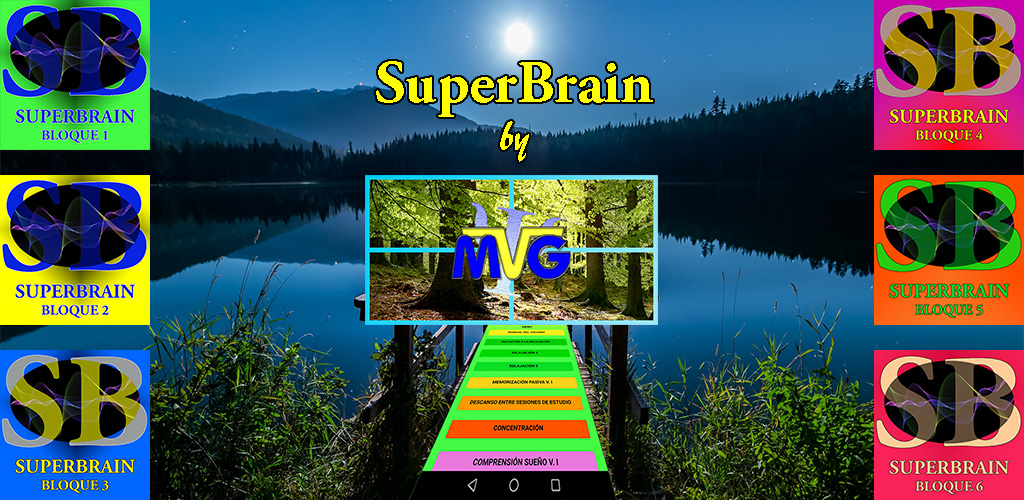
- Superbrain Apps (for Android devices) (Replacement for Megabrain devices)
- Megabrain XS N series (Replaced by Superbrain Apps)
- Megabrain XP N series (Replaced by Superbrain Apps)
- Megabrain XP (Replaced by Superbrain Apps)
- “Ganzeffect” lenses
- “Mind Mirror”
- F 1000 Biofeedback System
- LISS body stimulator
Current uses in the clinical field
- Psychiatric support
- Psychological support
- Recovery from harmful habits
- Weight loss
- Anxiety, depression, phobias
- Chronic pain management
- Learning difficulties
- System enhancement Immunological
- Pre- and post-surgical intervention
- Dentistry
Uses in the personal sphere
- Deep relaxation
- Self-hypnosis and suggestion
- Visualization of achievements
- Re-encoding of past events
- Increased IQ
- Improved physical performance
- Creativity
- Super-learning
- Enhanced memory
- Meditation and transcendence